EV Charging Guide: 5 Smart Strategies for Efficient Driving
"Charging should no longer be a wait, but a process that flows seamlessly into the rhythm of daily life."
The transition to electric vehicles is about more than just swapping an engine for a motor; it is a fundamental shift in how we fuel our lives. As we move toward an electric future, the goal is to make energy replenishment an invisible part of our routines—filling up while we sleep or while we work.
* Understanding the difference between AC (slow) and DC (fast) charging. * Navtaining residential vs. public infrastructure. * Balancing charging time against travel distance. * Anticipating the future of global energy networks.

Should I charge at home or on the road? The clock hits 11:00 PM on a Tuesday in late 2025, and the quiet hum of the neighborhood is broken only by the soft click of a charging cable snapping into into place in a darkened driveway.
The blue LED light on the wall unit pulses steadily, signaling that the car is now part of the house's energy ecosystem.
Charging infrastructure is generally divided into "stationary charging," where the user stays put, and "mobile charging," which happens during transit. Choosing the right balance between these two is the key to efficient EV ownership.
Consumer preferences are becoming increasingly specific. According to a study, 64 percent of consumers expect to charge in their own garage, while 21 percent want to frequent a central charging station.
Meanwhile, casual charging at shops or company grounds is expected by a mere 6 percent and 4 percent of consumers, respectively.
Infrastructure is evolving to meet these distinct needs. For example, as of 2026, Nissan has installed high-speed charging stations at 90% of Nissan dealerships in Japan. This shows that charging is shifting from a mere utility to a core component of brand service networks.

What is the difference between fast and slow charging?
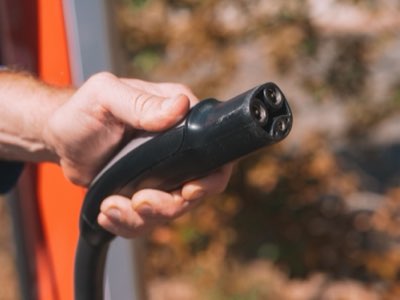
A gray, rainy afternoon hits in early 2026, and the wipers sweep across the windshield as the car pulls into a wide, brightly lit charging bay at a highway service plaza. The heavy, thick cable feels substantial in hand, a tool designed for the urgency of the road.
Charging is split into two main categories: Alternating Current (AC) for slow charging and Direct Current (DC) for fast charging. The difference lies in how the energy is converted and how much time you spend waiting.
| Feature | Slow Charging (AC) | Fast Charging (DC) |
|---|---|---|
| Primary Location | Homes, apartments, offices | Highway rest stops, large malls |
| Mechanism | Converted by the car's onboard charger | Delivered directly to the battery |
| Typical Use | Overnight or during work shifts | During short travel breaks |
| Main Benefit | Better for battery longevity and cost | Extremely rapid energy replenishment |
The efficiency of fast charging depends heavily on the hardware. For instance, all Terra 51 CHAdeMO-type DC chargers are fast-charging, only needing between 15 and 30 minutes to fully charge a car's battery.
In contrast, AC charging is much gentler on the battery, making it ideal for daily top-offs. A smart ownership strategy involves using slow charging for the bulk of your needs and reserving fast charging for the road.
How long will I actually have to wait?
The aroma of freshly brewed coffee fills the air as you sit in a cafe in mid-2026, glancing through the window at the car parked at the charging station.
You watch the digital display on the charging pedestal, calculating whether you have enough time to finish your book before the next leg of the trip.
Charging time is the most sensitive factor in user satisfaction. While technology is making wait times shorter, the gap between expectation and reality remains a hurdle.
In Germany, the requirements for the charging process are clear: 51 percent of consumers expect a car to be charged in less than 2 hours, while up to 4 hours is acceptable to 60 percent of consumers. This proves that charging is not just about speed, but about managing the user's time.
The relationship between range and time also creates different user profiles. While 53 percent say that 300 km is enough, there are also 31 percent who like to travel 450 to 1000 km before they are required to recharge.
This tension between range anxiety and convenience drives much of the current technological race.

What is the momentum of global infrastructure? Walking through a bustling city center in 2026, you notice the diverse landscape of charging stations—some are small, discreet pedestals on street corners, while others are massive, multi-bay energy hubs.
The expansion of charging networks is accelerating globally. According to the International Energy Agency, more than 1.3 million public charging points were added globally in 2024. This massive growth reflects a permanent shift in transportation.
In Europe, the scale of the shift is particularly evident. In 2024, the IEA reported that the total number of public charging stations in Europe exceeded 600,000. This was an increase of more than 30% over the previous year.
This expansion is often a matter of national security. Many governments aim to expand the renewable energy sector to 60% of their grid, and increasing EV usage is a key strategy to reduce dependency on foreign oil.
By building these networks, nations can hedge against the volatility of global fuel markets.
Tips for an efficient charging plan
Before hitting the road for a long trip, you pull out your phone to check the charging map. You don't just look at the nearest station; you look at the secondary options, planning for the possibility of a broken charger or a full queue.
The secret to EV ownership is not luck, but planning. When I first transitioned to an electric car in late 2024, I realized that my entire weekend routine had to shift to accommodate my new battery limits.
You should not simply hunt for chargers as you run low; you need a strategy tailored to your lifestyle.
- Prioritize Home Charging: The cheapest and most convenient method is charging at home. Use overnight AC charging as your primary energy source.
- Identify Fast-Charge Corridors: For long-distance travel, identify high-speed DC hubs at highway junctions before you leave.
- Verify Connector Compatibility: Always check if your vehicle's port (CCS, NACS, or CHAdeMO) matches the station's plug.
- Use Real-Time Apps: Use mobile apps to check the occupancy status of chargers to avoid arriving at a full station.
- Manage Battery Health: Try to keep your battery between 20% and 80% for daily use to maximize the lifespan of the cells.



Comments 0