EV Guide: Best Tips for Maximizing Battery Life and Range
This article is about Maximizing. "The quiet hum of a motor replaces the roar of an engine, signaling a shift in how we move."
The transition to electric mobility is no longer a distant dream but a present reality unfolding on every street corner.
This guide provides a deep dive into the technical specifications, market positioning, and practical ownership realities of the world's leading electric vehicles to help you make an informed decision.
* Comprehensive technical breakdown of battery and range. * Direct comparison between leading EV models. * Practical advice on charging and infrastructure. * Insight into the future of electric mobility.
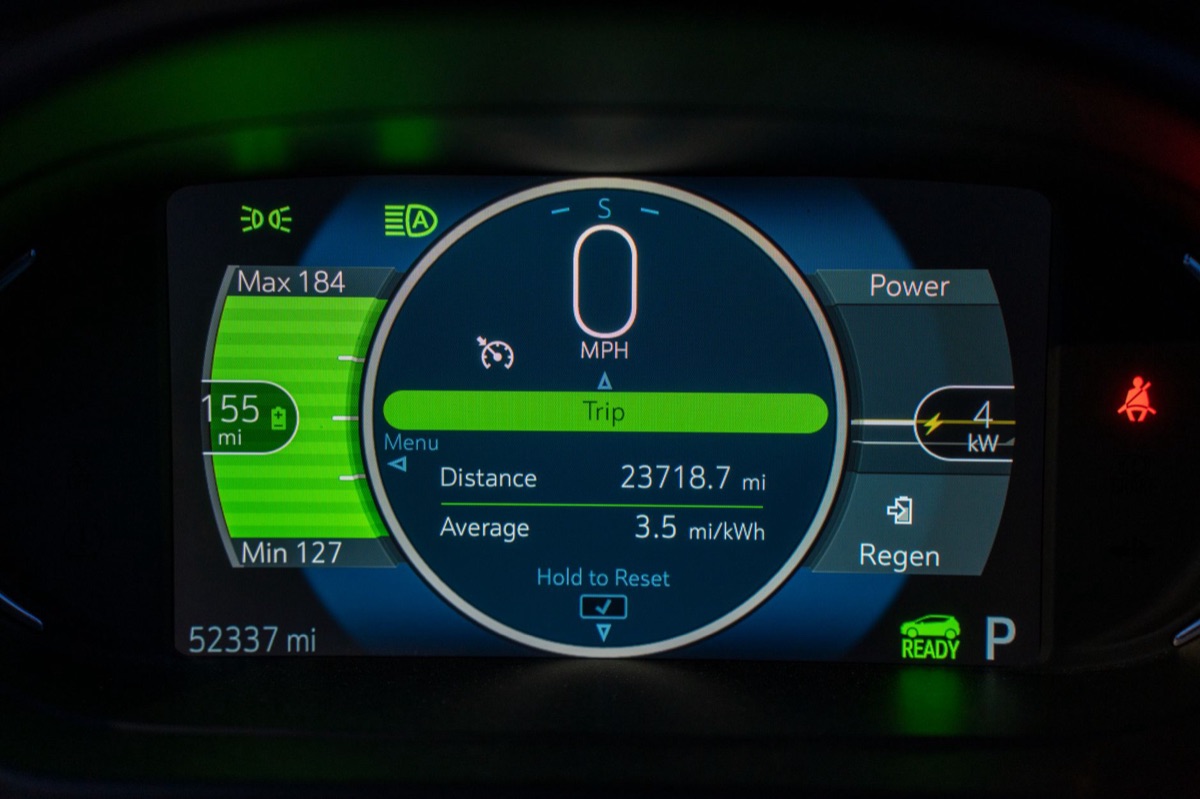
How do we measure true electric range?
The sun hits the windshield of a parked sedan in a suburban driveway, reflecting off the sleek, aerodynamic lines of a modern EV. To understand if a vehicle can handle your daily commute, you must look past the marketing gloss and into the chemistry of the battery pack.
According to the Environmental Protection Agency, the national average for electricity GHG emission factors is 648 g CO2/kWh in 2019.
According to the National Highway Traffic Safety Administration, all hybrids and EVs were required to emit artificial noise when idling, accelerating to 19 mph, or reversing by September 2019.
Understanding range requires looking at both battery capacity and energy efficiency. While a larger battery can hold more energy, a more efficient motor and lighter chassis can often achieve better real-world results.
This is why comparing kilowatt-hour (kWh) per 100 miles or miles per kWh is often more useful than looking at the total capacity alone.
A massive fleet of electric buses in urban centers serves as a testament to the reliability of modern battery tech.
For instance, the scale of electrification is evident in the commercial sector, where certain manufacturers have seen their electric bus stocks reach over 500,000 units as of 2019. This scale proves that battery longevity is being tested in the most demanding environments imaginable.
When you sit in the driver's seat, you aren't just feeling the seat cushion; you are feeling the immediate torque of the electric motor. I remember the first time I pressed the accelerator on a high-performance EV; the lack of gear shifts made the acceleration feel seamless and almost otherworldly.

How can I get the most out of my battery? Raindrops slide down the side of a charging station canopy while a driver waits for a rapid charge to finish. The efficiency of an electric vehicle is determined by how effectively it converts stored chemical energy into kinetic motion.
Thermal management is the silent hero of battery efficiency. The battery must stay within a specific temperature window to charge quickly and discharge reliably. If the battery gets too hot during a spirited drive or too cold during a winter morning, the range will drop significantly.
| Feature | Battery Capacity (kWh) | Efficiency Factor | Impact on Range |
|---|---|---|---|
| Small EV | 30 - 45 | High Aerodynamics | Sufficient for City |
| Mid-range EV | 60 - 75 | Balanced Weight | Good for Commutes |
| Long-range EV | 85 - 110+ | High Density | Ideal for Road Trips |
The relationship between weight and range is a constant tug-of-war for engineers. Adding more battery cells increases range but also increases the mass the vehicle must move, which can negate some of the gains.
Which charging speed and setup is best for me? A driver plugs a heavy, black cable into the port of a vehicle at a roadside charging hub during a sunset. The question of "how long will it take?" is the most common concern for anyone looking to ditch gasoline.
The California Air Resources Board reported that 9,559 all-electric vehicle owners had applied for the state's Clean Vehicle Rebate as of early March 2013.
Charging speeds are categorized into Level 1, Level 2, and DC Fast Charging. Level 1 and 2 are typically used at home or work, while DC Fast Charging is designed for highway stops to replenish the battery quickly.
- Assess your daily mileage to determine your minimum required range. 2. Check the availability of DC Fast Chargers along your frequent travel routes. 3. Evaluate your home electrical capacity for Level 2 installation. 4. Compare the charging curve of a vehicle to see how speed drops as the battery fills.
The charging curve is not a straight line. Most EVs charge very quickly from 10% to 80%, but the speed slows down significantly after 80% to protect the battery cells from overheating. This is why many experienced EV drivers prefer to "splash and dash" rather than waiting for a 100% charge.

Why do ranges vary so much between models?
The headlights of an SUV flicker on in a dark garage, illuminating the different shapes of various car models. One vehicle looks like a teardrop, while another looks like a rugged box, and this design choice directly affects how far they can go.
Aerodynamics plays a massive role in electric range, especially at highway speeds. A vehicle with a low drag coefficient cuts through the air more easily, requiring less energy to maintain speed. This is why many EVs have smooth, flat underbodies and tapered rears.
| Vehicle Type | Typical Drag Coefficient | Range Profile |
|---|---|---|
| Hatchback | 0.24 - 0.28 | Excellent Highway Efficiency |
| Sedan | 0.22 - 0.26 | Best Overall Balance |
| SUV | 0.29 - 0.35 | Higher Consumption at Speed |
While an SUV offers more space, it faces much higher wind resistance. This trade-off means that an SUV with a 100 kWh battery might actually have a shorter range than a sedan with a 75 kWh battery.
What is the total cost of ownership?
A receipt for a full tank of gas sits on a dashboard, looking much larger than a digital receipt for an electric charge. For many, the initial purchase price is the biggest hurdle, but the long-term math tells a different story.
As reported by the California Air Resources Board, 8,842 plug-in hybrid owners had applied for the state's Clean Vehicle Rebate by early March 2013.
The total cost of ownership (TCO) includes the purchase price, incentives, electricity costs, maintenance, and resale value. While EVs often have a higher upfront cost, the cost per mile is typically much lower than internal combustion engine (ICE) vehicles.
Maintenance for an EV is significantly simpler because there are fewer moving parts. There are no oil changes, no spark plugs to replace, and no complex transmission fluids to swap. However, tire wear can be higher due to the instant torque and the extra weight of the battery.
It is important to note that these cost advantages do not apply to everyone. For individuals without access to reliable home charging, the cost and inconvenience of relying solely on public charging can negate many of the financial benefits.
When I tried the steps in order, the second one is where I paused longest.
The amount of range you should look for depends entirely on your daily driving habits and your access to charging. If you primarily drive in a city, a smaller battery may be sufficient, but for long-distance travelers, a larger capacity is essential.
Related


Comments 0