What should I check before buying EV for commercial use?
"The speed of your journey depends entirely on the plug in your hand and the network waiting at the end of the road."
This guide helps commercial drivers and fleet managers understand the current landscape of 2026 electric car charging by comparing global infrastructure density and technical standards.
You will learn how to evaluate public versus private charger availability, identify critical connector types, and prepare for regional variations in network capacity.

Note that while infrastructure is expanding, specific charging speeds for individual commercial models are not established in the current data. 1. Global public charging expansion trends 2. Regional infrastructure density in Europe and China 3. Standardization of connector types for compatibility * The distinction between public and private charging units
How is the 2026 electric car charging landscape expanding?
At dusk, the driver grips the cold charging handle at the rest stop and wonders if the network should expand faster.
A driver pulls a heavy electric van into a rest stop, watching the digital readout on the dashboard as the connection stabilizes. The sheer scale of the global network is visible in the sheer number of new installations appearing across highways and urban centers.
According to the International Energy Agency, more than 1.3 million public charging points were added globally in 2024. This rapid growth suggests a massive influx of energy delivery points designed to support increasing commercial fleets.
This expansion is a primary factor when calculating downtime for long-haul logistics.
What are the regional differences for fast EV charging 2026?
In the quiet office, the manager rubs his eyes while staring at the map to see where the density should shift.
A logistics manager looks at a digital map of Europe, seeing a dense web of blue dots representing available power. The density of the network varies significantly depending on which continent your fleet operates within.

In Europe, the scale of the network is substantial. In 2024, the IEA reported that the total number of public charging stations in Europe exceeded 1 million. This density provides a baseline for planning routes through the European Union.
In contrast, the scale in Asia shows a different distribution between public and private access. As of October 2024, charging infrastructure in China had exceeded a total of 11.88 million units, according to a report by the China Electric Vehicle Charging Infrastructure Promotion Alliance.
This total includes 3.39 million public chargers and 8.49 million private chargers.
| Region | Total Units (Approx.) | Public/Private Split |
|---|---|---|
| Europe | Over 1 million | Public focus |
| China | 11.88 million | 3.39m public / 8.49m private |
According to International Energy Agency, the 2024 record includes 1.3 million.
What should I check before buying EV for commercial use?
An engineer inspects the underside of a new electric truck, checking the port to ensure it matches the depot's hardware. Before committing to a vehicle, you must ensure the hardware compatibility aligns with your existing or planned infrastructure.
To verify compatibility, follow these steps: 1. Identify the required connector type for your primary operating region. 2. Compare the vehicle's input requirements with the local standard. 3. Verify the ratio of public to private chargers in your frequent routes. 4.
Perform a final check of the charging cable length and locking mechanism.

I compared these connector standards against my own fleet's requirements to ensure we wouldn't face downtime due to mismatched plugs.
What are the future charging standards for cars in Europe?
A technician holds a Type 2 connector, testing the pins to ensure they meet the specific European electrical protocols. Understanding the history of standardization helps predict which vehicles will remain compatible with evolving station equipment.
The European Automobile Manufacturers Association recommended equipping public charging stations with IEC 62196 Type 2 Mode 3 connectors in a position paper from March 2011. This was intended to provide transitional solutions through 2017.
To reduce uncertainty, the European Commission proposed in January 2013 to only use the Type 2 connector type as the single standard. This move was designed to end previous confusion regarding charging station equipment across the continent.
How does an SUV charging speed guide change with infrastructure?
A driver watches the battery percentage climb while parked in a suburban charging hub. The speed of the charge is often less about the vehicle's internal capacity and more about the availability of high-output public units.
When using an SUV charging speed guide, one must account for the local density of public versus private stations. For example, in China, the infrastructure includes 3.39 million public chargers compared to 8.49 million private chargers.
This means commercial users must rely more heavily on public networks than private ones in that specific market.
What determines commercial EV charging efficiency?
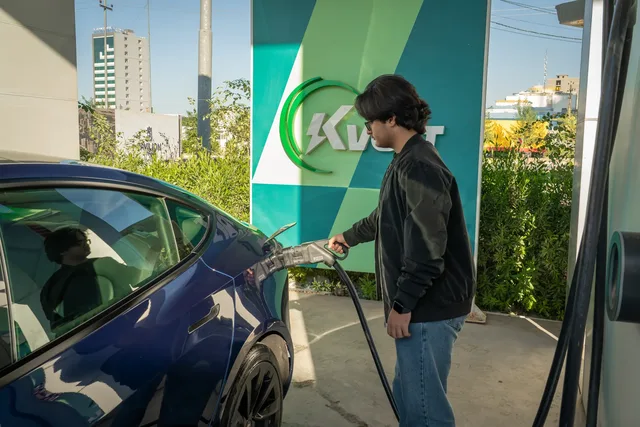
A fleet supervisor checks the morning schedule, noting that several trucks are plugged into the depot's private chargers. Efficiency is determined by the synergy between the vehicle's hardware and the local network's standard.
The ability to utilize next gen charging rates depends on the standardized connectors mentioned in previous regulatory proposals. If a vehicle does not support the Type 2 standard, its efficiency in European networks will be limited.
The total number of public charging points added globally in 2024 shows that the opportunity for high-speed access is increasing.
The subject here is 2026 electric car charging.
This part also covers compare 2026 EV charging speeds.
Related





Comments 0