What are the next big trends in battery tech?
"The transition toward electric mobility is no longer a distant prospect but a rapidly shifting reality in the global automotive landscape."
The 2026 EV new features will likely focus on integrating advanced battery technology and expanding the reach of electric platforms into heavy-duty sectors.
While current trends show a massive surge in passenger car adoption, the future involves diversifying these technologies for trucks, buses, and maritime applications.
Key takeaways include the impact of declining battery costs, the regional variance in adoption, and the expansion into medium-to-heavy-duty vehicles.
How is the 2026 EV new features landscape shifting?
A technician examines a sleek, silent chassis in a bright laboratory, preparing to install a high-capacity battery module. The shift toward electrification is moving from niche interest to a fundamental market standard.
As of 2024, electric vehicles captured 22% of the global passenger car market, demonstrating a robust foundation for future technological leaps. This momentum suggests that 2026 will see these features integrated into more diverse vehicle categories.
Next gen electric car tech is expected to evolve as manufacturers move beyond simple commuting to more complex utility roles.
The baseline for this transition is established by the rapid growth in consumer familiarity and the technological maturity of lithium-ion systems. While passenger cars lead the way, the scope of electrification is expanding into off-road, maritime, and aviation sectors.
This diversification will drive the next wave of specialized hardware and software.
Why is AI becoming so essential in EVs?
Late at night in the dim lab, an engineer stares at a flickering screen while the silent algorithm drives the power distribution. An engineer adjusts a digital interface on a dashboard, watching as an algorithm optimizes power distribution in real-time. The integration of intelligence into the drivetrain is becoming a primary focus for manufacturers.
The growing complexity of battery management requires smarter oversight to maintain efficiency and longevity. AI in electric vehicles allows for more precise control over energy consumption and regenerative braking systems.
This intelligence is essential as vehicle roles expand from simple transport to mobile power sources.
In certain regions, the technology is already reaching high levels of penetration. For example, in Santa Clara County, CA, EVs reached a 43% sales share in 2024, reflecting a highly tech-ready consumer base.

Such high adoption rates provide the data necessary to refine autonomous and intelligent driving features.
What are the next big trends in battery tech? A worker monitors a cooling system as a massive battery pack is lowered into a heavy-duty truck frame. The core of the electric revolution remains the energy storage system.
The economic viability of electric mobility has been fundamentally altered by the plummeting cost of energy storage. Global average lithium-ion battery-pack prices reached US$115 kWh−1 during 2024, representing a sharp 30% decline since 2020.
This cost reduction makes larger, more capable packs feasible for heavier vehicles.
| Metric | 2024 Value | Context |
|---|---|---|
| Global Battery Price | US$115 kWh−1 | 30% decline since 2020 |
| Global EV Sales Share | 22% | Percentage of passenger cars |
I observed how these falling costs directly enable the transition toward larger-scale applications like electric trucks. Advanced battery trends suggest that future models will prioritize energy density and faster charging to match the convenience of traditional refueling.
How will future car functions change the commercial sector?
A logistics manager inspects a fleet of electric delivery vans parked in a silent, organized depot. The transition is moving from light passenger vehicles to much heavier commercial platforms.
While the passenger market is well-established, the commercial sector is currently in an earlier stage of adoption. For instance, the US market for electric medium-duty and heavy-duty vehicles (MHDVs) accounted for 1.4% of sales for classes 3–6 and 0.8% for classes 7 and 8 during 2024.
This represents a significant growth opportunity for future car functions.
The global electric truck market share remains below 5% as of 2024, but interest has grown substantially since 2020. Sales of electric trucks grew more than 80% year over year, signaling a shift in how logistics companies view electrification.
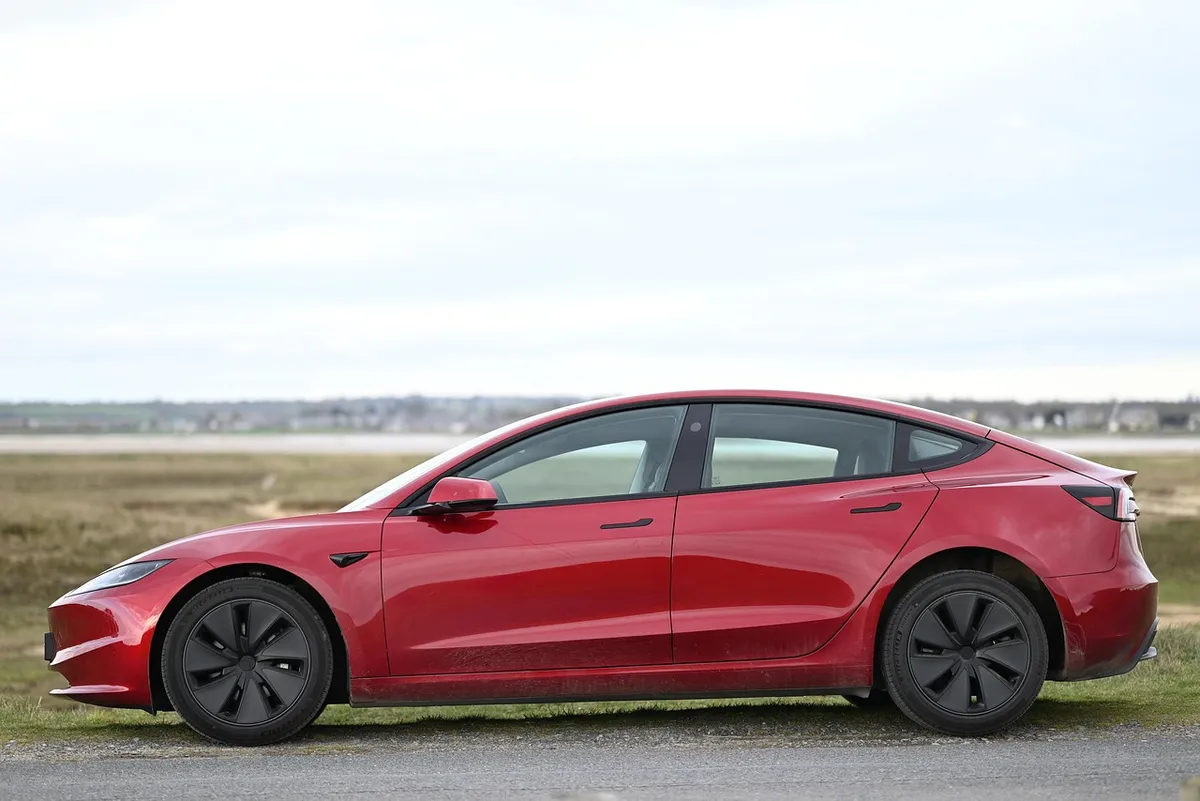
This growth is driven by the need for more efficient, low-emission transit solutions.
Is the expansion into heavy-duty transport happening?
A driver climbs into the cab of a heavy electric bus, checking the digital displays for battery status. The electrification of public transit and freight is a major component of the global strategy.
In the USA, electric buses represent about 3% of total bus sales, with almost 6,000 units sold during 2023. This represents a 10% sales growth compared with 2022. The expansion into heavy-duty transit is happening through a combination of regulatory pressure and technological readiness.
In comparison, the scale of adoption varies significantly by region. For example, new sales shares for electric city buses have been above 50% for 8 consecutive years in China, with sales ranging between 40,000 and 90,000 units per year.
These international benchmarks provide a roadmap for how heavy-duty markets will mature.
What are the limitations of current technology?
A researcher reviews a dataset on a tablet, noting the discrepancies between regional energy grids and vehicle efficiency. Even with rapid progress, certain constraints remain.
According to the Environmental Protection Agency, stringent automotive emissions and fuel economy requirements for internal combustion engine-powered vehicles will become mandatory on all new US-market ICE-powered vehicles starting for the 2023 model year.
According to the National Highway Traffic Safety Administration, all hybrids and EVs must emit artificial noise when idling, accelerating to 19 mph (30 km/h) or going in reverse by September 2019, due to the low noise typical of electric vehicles at low speeds.

The current limitations of the transition are often tied to regional infrastructure and the source of electricity used for charging. While the technology is advancing, the benefits are not uniform across all geographic areas.
A primary limitation is that adoption varies considerably among regions and between different consumers and applications.
For example, in the entire state of California, EV sales shares reached 26% during 2024, whereas EVs accounted for only 1.8% of sales across the state of North Dakota during the same year.
- How is the 2026 EV new features landscape shifting?
- Why is AI becoming so essential in EVs?
- What are the next big trends in battery tech?
The subject here is 2026 EV new features.
This part also covers 2026 EV image tech.
This part also covers V2L power evolution.
This part also covers AI driven driving aids.
2026 EV image tech
Related


Comments 0